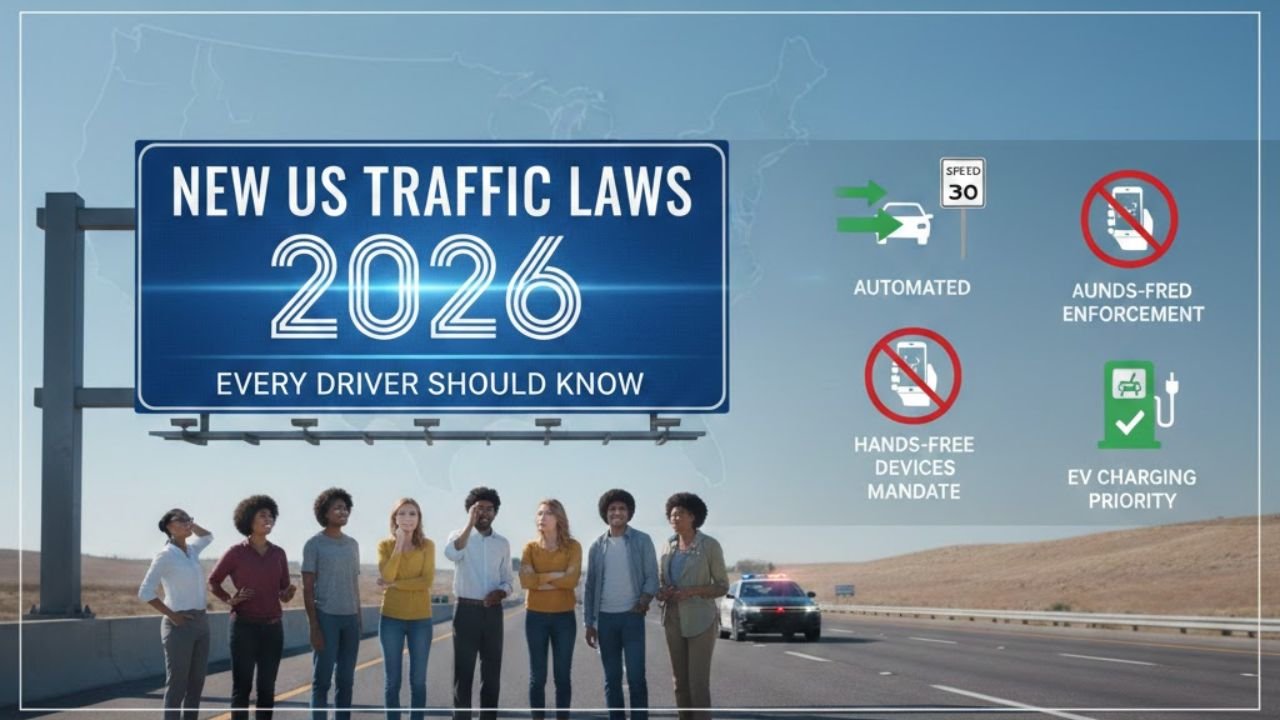
As we move further into 2026, the landscape of American roads is undergoing a significant transformation. Driven by a mix of federal mandates and state-level initiatives, the new traffic laws taking effect this year prioritize advanced technology, stricter enforcement of distracted driving, and enhanced safety for vulnerable road users. Whether you are a daily commuter or an occasional traveler, understanding these shifts is essential to avoid hefty fines and stay safe.
Federal Technology Mandates and AEB Systems
One of the most profound changes in 2026 comes from the National Highway Traffic Safety Administration (NHTSA). Following the directives of the Bipartisan Infrastructure Law, the federal government has pushed for the integration of Automatic Emergency Braking (AEB) and Pedestrian AEB in nearly all new light vehicles. While full fleet transition takes time, the 2026 model year marks a critical milestone where these systems are becoming the standard rather than an optional luxury. These systems are designed to detect imminent collisions and apply the brakes faster than a human can react, aiming to reduce rear-end crashes and pedestrian fatalities significantly.
Stricter Impaired Driving Prevention
The fight against driving under the influence (DUI) is entering a high-tech phase. Federal regulations and various state laws, such as those in Utah and California, are tightening the noose on impaired driving. In Utah, offenders convicted of “extreme DUI” now face a “No Alcohol Sale” designation prominently displayed on their driver’s licenses. Meanwhile, California has expanded its Ignition Interlock Device (IID) requirements to include even first-time offenders in many jurisdictions. There is also a strong push toward “passive” alcohol detection technology in new vehicles, which may start appearing as manufacturers prepare for future federal mandates.
| Regulation Category | Primary Change in 2026 | Impact on Drivers |
| Distracted Driving | Primary enforcement of hands-free laws | Officers can stop you for holding a phone |
| Speed Enforcement | Expansion of AI-powered speed cameras | Increased risk of automated tickets in work zones |
| License Renewals | Cognitive/Vision tests for seniors (70+) | Shorter renewal cycles and mandatory in-person visits |
| EV Regulations | New annual registration surcharges | Higher yearly costs for electric vehicle owners |
| Safety Tech | Mandatory AEB in new passenger vehicles | Standardized automatic braking for 2026 models |
The End of the Grace Period for Hands-Free Laws
Distracted driving enforcement has shifted from a secondary to a primary offense in a majority of states. In previous years, a driver might only receive a ticket for holding a phone if they were already pulled over for speeding. As of 2026, police in many states have the authority to stop a vehicle solely because they see a device in the driver’s hand. Fines have also seen a sharp increase, with some states imposing penalties exceeding $500 for a first offense. The goal is a universal “hands-free” culture where voice commands and integrated vehicle systems are the only legal way to manage communication.
Automated Enforcement and Registered Owner Liability
The “eye in the sky” is becoming more prevalent as cities expand their networks of speed and red-light cameras. In 2026, states like California and Illinois are deploying AI-enhanced cameras specifically in work zones and school corridors. A critical legal shift this year is the widespread adoption of “Registered Owner Liability.” This means that if a camera captures a car speeding, the ticket is automatically sent to the owner of the vehicle, regardless of who was behind the wheel. Challenging these tickets has become more difficult, and in several states, these automated violations now result in points on your driving record.
New Rules for Electric and Autonomous Vehicles
As the number of Electric Vehicles (EVs) on the road grows, states are introducing new fees to compensate for lost gas tax revenue. Many drivers will see a new “EV Road Improvement Fee” on their 2026 registration renewals. Furthermore, 2026 is a landmark year for Autonomous Vehicle (AV) accountability. In California, new laws allow law enforcement to issue “notices of noncompliance” directly to AV manufacturers for traffic violations committed by self-driving cars. This shift ensures that as technology takes over the driving task, the legal responsibility remains clearly defined.
Enhanced Safety for Vulnerable Road Users
Protecting those outside the vehicle has led to several new “Slow Down and Move Over” expansions. In 2026, many states have updated these laws to include any stationary vehicle with hazard lights on—not just emergency responders. This means if you see a stranded motorist or a utility truck on the shoulder, you are legally required to move over a lane or significantly reduce your speed. Additionally, new micromobility regulations are being enforced for e-bike users, including mandatory helmet laws for minors and stricter age restrictions to ensure these faster cycles are operated safely on public roads.
FAQs
Q1 Can I be pulled over just for holding my phone while at a red light?
Yes. In most states with primary enforcement laws updated for 2026, holding a device while the vehicle is “in operation”—which includes being stopped at a red light—is a ticketable offense.
Q2 Do these new safety technology mandates apply to my older car?
No. Federal mandates for Automatic Emergency Braking and other safety features apply to newly manufactured vehicles. You are not required to retrofit your older vehicle with these technologies.
Q3 Is there a federal age limit for driving that starts in 2026?
There is no federal age limit. However, many states have introduced stricter renewal requirements for 2026, such as mandatory vision and cognitive screenings for drivers over the age of 70.
Disclaimer
The content is intended for informational purposes only. you can check the officially sources our aim is to provide accurate information to all users