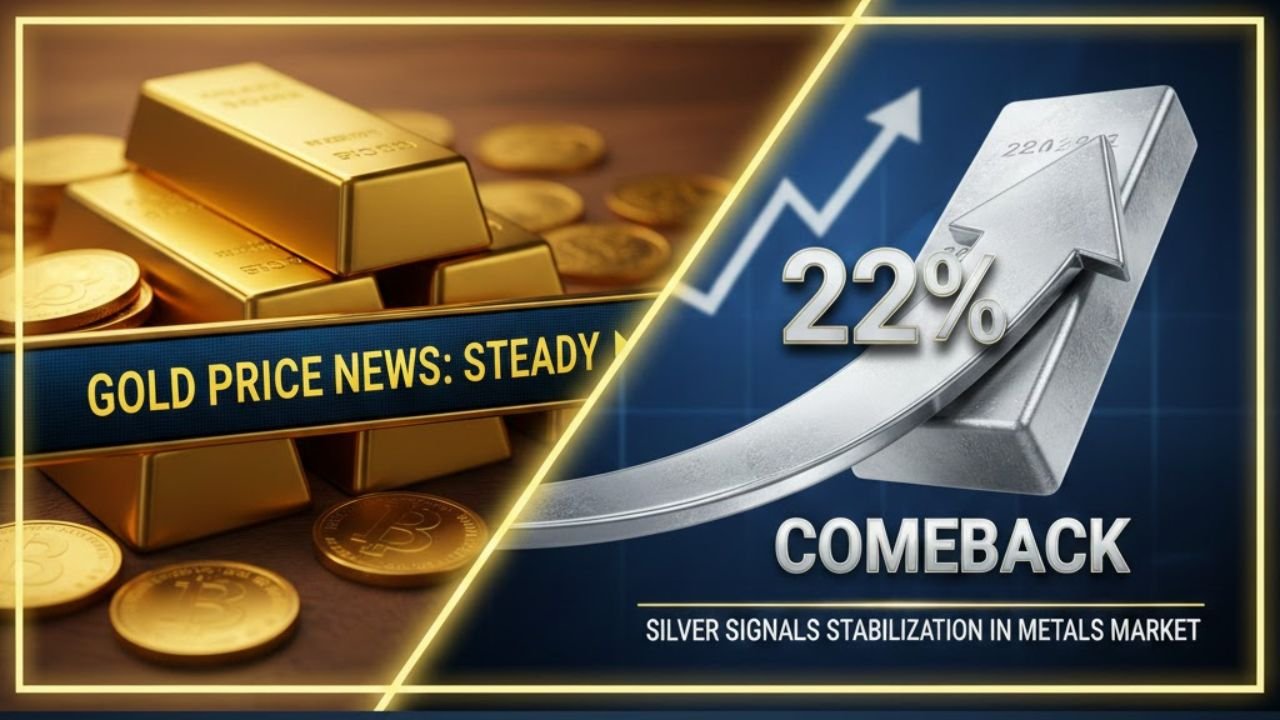
The precious metals market has entered a pivotal phase of reconstruction following a period of unprecedented volatility. After a historic rally that saw silver touch record highs near $121 per ounce in late January 2026, the market experienced a “flash crash” that wiped out significant gains in mere days. However, the narrative has shifted once again. A remarkable 22% recovery in silver prices over the last week has caught the eye of global investors, suggesting that the “paper market” panic is subsiding in favor of solid physical demand. This stabilization is not merely a technical bounce; it represents a fundamental reassessment of silver’s value as both a safe-haven asset and an indispensable industrial commodity in an era of rapid technological expansion.
The Mechanics of the 22% Silver Recovery
The recent surge, which saw silver prices rebound from a low of approximately $64 to trade back above the $80 mark, was largely driven by a combination of short-covering and renewed dip-buying. When the market plummeted in early February—triggered by rising margin requirements at the CME Group and a strengthening US Dollar—leveraged speculators were forced to liquidate positions. As these forced liquidations dried up, value investors and industrial buyers stepped in. The 22% climb reflects a market that has successfully “flushed out” excessive speculation, leaving behind a more resilient price floor supported by long-term holders and institutional exchange-traded fund (ETF) inflows.
Economic Drivers and the Federal Reserve Influence
Central to this recovery is the shifting sentiment regarding the US Federal Reserve’s path for 2026. While the nomination of hawkish figures initially bolstered the dollar, the underlying reality of a cooling labor market and persistent fiscal deficits has kept the case for gold and silver alive. Market participants are currently pricing in at least two rate cuts by mid-year, a move that historically reduces the opportunity cost of holding non-yielding assets. Furthermore, the persistent US national debt, now exceeding $38 trillion, continues to act as a powerful tailwind for silver, as investors seek “hard assets” to hedge against potential currency debasement and long-term inflation.
Comparative Market Performance Table: February 2026
| Metal Metric | Gold (24K / 10g) | Silver (Per kg) | International Gold (oz) | International Silver (oz) |
| January Peak | ₹17,885 | ₹3,83,100 | $5,594 | $121.64 |
| February Low | ₹15,235 | ₹2,29,187 | $4,500 | $64.00 |
| Current Rate | ₹15,791 | ₹3,00,000 | $5,066 | $81.20 |
| Recovery % | ~3.6% | ~22.5% | ~12.5% | ~26.8% |
Geopolitical Tensions and Safe-Haven Resurgence
Geopolitics remains a primary catalyst for the current stabilization. Renewed frictions in the Middle East and uncertainty surrounding international trade tariffs have reignited the safe-haven appeal of precious metals. Unlike early 2025, where silver was primarily viewed as a high-growth industrial play, the current environment has forced it to reclaim its title as “the poor man’s gold.” As investors rotate out of high-risk equities and volatile cryptocurrencies, the silver market has benefited from a “flight to safety,” providing the necessary liquidity to sustain its recent price recovery and maintain a buffer against further downward pressure.
Industrial Demand: The Unseen Floor
Beyond the headlines of price swings lies a structural supply deficit that is now entering its sixth consecutive year. The “Green Energy” revolution is no longer a future prospect; it is a present reality driving massive silver consumption. From photovoltaic solar panels to the silver-rich components required for Artificial Intelligence (AI) data centers and electric vehicle (EV) power grids, industrial demand is effectively stripping the market of available physical stock. With London and Shanghai warehouse inventories at decade-lows, any significant price dip is met with aggressive buying from manufacturers who cannot afford a supply chain disruption, further cementing the current stabilization.
Technical Outlook and Key Resistance Levels
From a technical perspective, silver’s move above the $78 to $80 resistance zone is a bullish signal that the worst of the February correction may be over. Analysts are now closely watching the $92.24 level on the international spot market; a sustained breach of this ceiling could open the doors for a retest of the triple-digit territory. In the domestic Indian market, the ₹3 lakh per kg mark has become the new psychological battlefield. If silver can maintain its footing at these elevated levels despite the ongoing volatility of the US Dollar, it will confirm that the metals market has indeed stabilized and is preparing for its next cyclical leg upward.
Strategic Conclusion for Bullion Investors
For the modern investor, the current “stabilization phase” offers a unique window of clarity. The recent 22% comeback demonstrates that while silver is subject to violent short-term swings, its long-term trajectory is underpinned by undeniable scarcity and utility. Gold remains the steadier anchor for conservative portfolios, but silver’s ability to outperform on a percentage basis during recovery rallies makes it an attractive component for those seeking growth. As we move further into 2026, the focus will likely shift from surviving the crash to capitalizing on a market that has found its balance amidst global economic transformation.
FAQs
Q1. Why did silver prices recover by 22% so quickly?
The recovery was driven by “dip-buying” after a sharp sell-off, a weakening US dollar, and a structural supply deficit where industrial demand for solar and AI tech outweighed the speculative “paper” selling.
Q2. Is it a good time to buy silver at the current price?
Many analysts view the current stabilization as a “buy-on-dips” opportunity, though they warn of continued volatility. Investors should monitor if the price holds above the ₹3,00,000/kg or $78/oz support levels.
Q3. How does the 2026 outlook for gold compare to silver?
While gold is performing as a more stable store of value near the $5,000 mark, silver is exhibiting higher volatility and greater percentage gains during rallies due to its dual role as an industrial metal and a hedge.
Disclaimer
The content is intended for informational purposes only. you can check the officially sources our aim is to provide accurate information to all users.