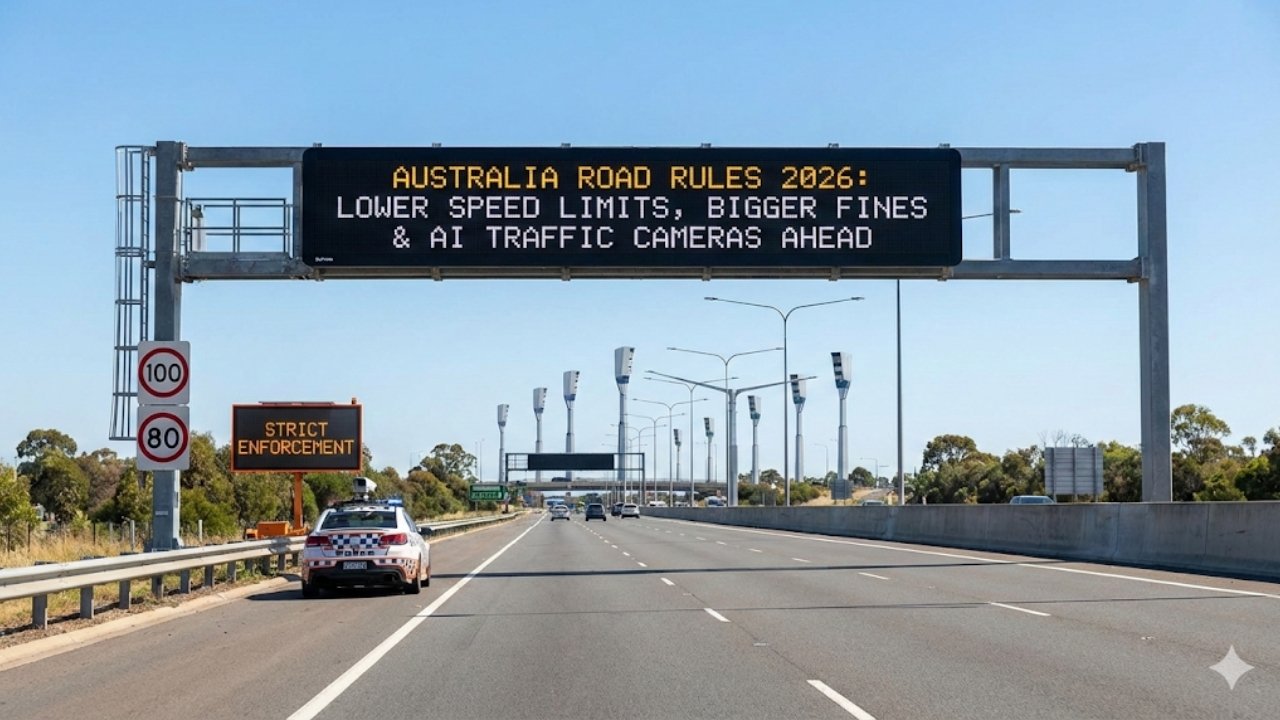
Australia’s road rules for 2026 bring stricter measures to cut accidents and boost safety, with states rolling out lower speed limits in busy areas, heftier penalties for violations, and smart AI cameras watching drivers closely. These changes aim to protect pedestrians, cyclists, and workers while adapting to growing urban traffic. Drivers need to stay informed to avoid surprises on the road.
Slower Speeds for Safer Streets
Many states are slashing speed limits in high-risk zones to save lives. Queensland continues dropping limits from 50 km/h to 40 km/h in crowded spots like esplanades and city centers, with more cuts planned through 2026. Victoria now requires drivers to slow to 40 km/h near roadside assistance vehicles, expanding old rules for emergency workers. South Australia pushes 25 km/h school zones, while proposals eye 30 km/h defaults in pedestrian-heavy areas nationwide.
Penalty Increases Hit Hard
Fines are climbing sharply to discourage risky behavior. Offenders face penalties up to $1,500 for serious breaches like heavy speeding or ignoring signals, plus immediate license suspensions in some cases. School zone speeding alone can cost over $1,100 with 5-7 demerit points. Passing slow-moving service vehicles without slowing draws $961 fines and 3 points. These hikes make compliance essential, especially for repeat offenders.
Key Penalties at a Glance
Here’s a breakdown of common 2026 fines and consequences across major states, based on updated regulations.
| Offense | Fine (AUD) | Demerit Points | License Impact |
|---|---|---|---|
| School Zone Speeding | $1,100+ | 5-7 | Possible suspension |
| Passing Service Vehicles | $961 | 3 | None initially |
| Speeding 10-24 km/h | $395-$543 | 3 | None |
| Speeding 25-44 km/h | $543-$976 | 3+ | 3-6 months |
| Red Light Violation | $600-$900 | 3 | None |
| High-Risk Speeding (45+ km/h) | Up to $2,340 | Varies | 12 months+ |
AI Cameras Step Up Enforcement
Advanced AI traffic cameras are transforming how rules are policed. Rolled out from late 2025 into 2026, they spot red-light running, phone use, and seatbelt lapses in real time using machine learning and high-res imaging. Features like night vision and multi-angle views provide solid evidence, cutting disputes and speeding up fines. Major intersections and highways now host these systems for round-the-clock monitoring.
Protecting Vulnerable Road Users
New rules prioritize cyclists, pedestrians, and e-scooter riders. Drivers must give wider berths when overtaking bikes, with fines for close passes. Expanded slow-down zones cover more service vehicles like tow trucks on freeways. Medical fitness checks for older drivers tighten, alongside random drug tests. These steps respond to rising urban crashes, urging everyone to share roads responsibly.
Rural Roads Face Limits Too
Even country drivers see changes, with federal proposals to drop default rural speeds from 100 km/h to 70 km/h on unsigned sealed roads. This targets high-fatality stretches, balancing safety against travel needs. Combined with AI cams on highways, it signals a nationwide safety push.
Adapting to the Changes
Motorists should watch signs, update GPS apps, and prep phones before driving. States vary slightly, so check local transport sites. These 2026 updates promise fewer crashes but demand vigilance from all.
FAQs
Q: When do AI cameras start fining?
A: Rollout began late 2025, fully active in 2026 at key spots.
Q: What’s the top fine amount?
A: Up to $1,500-$2,340 for severe speeding.
Q: Do rules differ by state?
A: Yes, but most follow national standards with local tweaks.
Disclaimer
The content is intended for informational purposes only. You can check the official sources; our aim is to provide accurate information to all users.