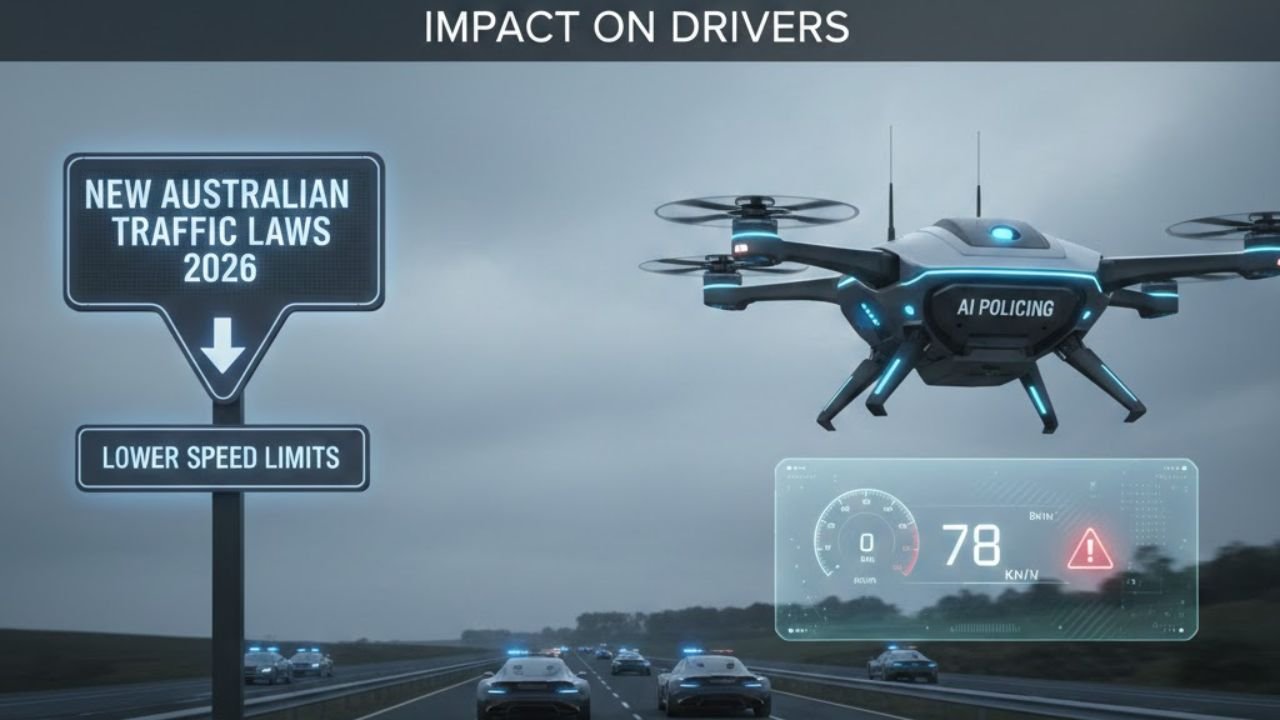
Australia’s roads are getting safer in 2026 with targeted changes to speed limits and smarter enforcement tools. These updates respond to rising fatalities by prioritizing pedestrians, school zones, and distracted driving across states.
Slower Urban Speeds Save Lives
States like Victoria, Queensland, and New South Wales lead the push for lower limits in busy areas. Many residential streets drop from 50 km/h to 40 km/h or 30 km/h near schools and high foot traffic spots, boosting pedestrian survival rates dramatically at these speeds.
Local councils now have more power to set 30 km/h zones, especially during school hours. South Australia enforces strict 25 km/h school rules, while Tasmania debates similar cuts to hit safety targets.
AI Cameras Watching Closely
Artificial intelligence powers new cameras that spot not just speeding but phone use and seatbelt errors inside vehicles. Trials in Queensland, Western Australia, and the ACT cut human review needs by over 98 percent, catching hundreds of thousands of offences.
These systems work day and night, even peering into cars for unrestrained passengers—holding drivers accountable. By 2026, average-speed cameras extend to cars on highways like the Pacific, tracking overall pace over distances.
Key Penalties at a Glance
Updated fines hit harder to change habits. Here’s a breakdown of major 2026 penalties:
| Offence | Max Fine (AUD) | Demerit Points | Notes |
|---|---|---|---|
| Mobile Phone Use | $1,200+ | 4-5 | AI detects handheld distractions |
| Seatbelt Misuse | $423-$1,100 | 3 | Covers all passengers |
| School Zone Speeding | $1,100+ | 5-7 | Focus on 30 km/h zones |
| Passing Tow/Emergency | $961 | 3 | Slow to 40 km/h (25 km/h SA) |
| Red Light Running | $600-$900 | 3 | Expanded camera nets |
Protecting Roadside Workers
Drivers must now slow to 40 km/h—or 25 km/h in South Australia—past stationary tow trucks, breakdown services, and garbage vehicles with lights on. This expands old rules for ambulances and police, covering freeways too.
Fines top $900 with points lost instantly, aiming to shield workers from high-speed passes. Victoria and others rolled this out mid-2025, with full national alignment by mid-2026.
Older Drivers Face Checks
From early 2026, drivers over 75 nationwide need regular medical reviews for license renewal, ramping up yearly past 80. Western Australia and Northern Territory finalize this framework soon.
High-power vehicle owners may require special training under new categories. These steps ensure skills match health and vehicle demands.
EV Owners Get Sound Alerts
New electric and hybrid models must emit low-speed sounds via Acoustic Vehicle Alerting Systems to warn pedestrians and the vision-impaired. Current owners skip retrofits, but showroom cars hum softly below 20 km/h.
This tackles “quiet car” risks as EV sales surge, aligning with global safety standards.
What Drivers Should Do Now
Check local signs for time-based zones and update habits like hands-free phones. Apps from state transport departments map camera spots and limits—stay informed to dodge fines.
These laws cut crashes through prevention, not just punishment. Safer roads benefit everyone from families to freight haulers.
FAQs
Q1 Are 30 km/h zones always on?
No, most activate during school hours, but some CBD areas run 24/7.
Q2 Do AI cameras fine immediately?
They flag for human review first, then issue notices with evidence.
Q3 Does ‘slow down’ apply across medians?
Usually not if a barrier separates lanes, but drive cautiously.
Disclaimer
The content is intended for informational purposes only. You can check the official sources; our aim is to provide accurate information to all users.