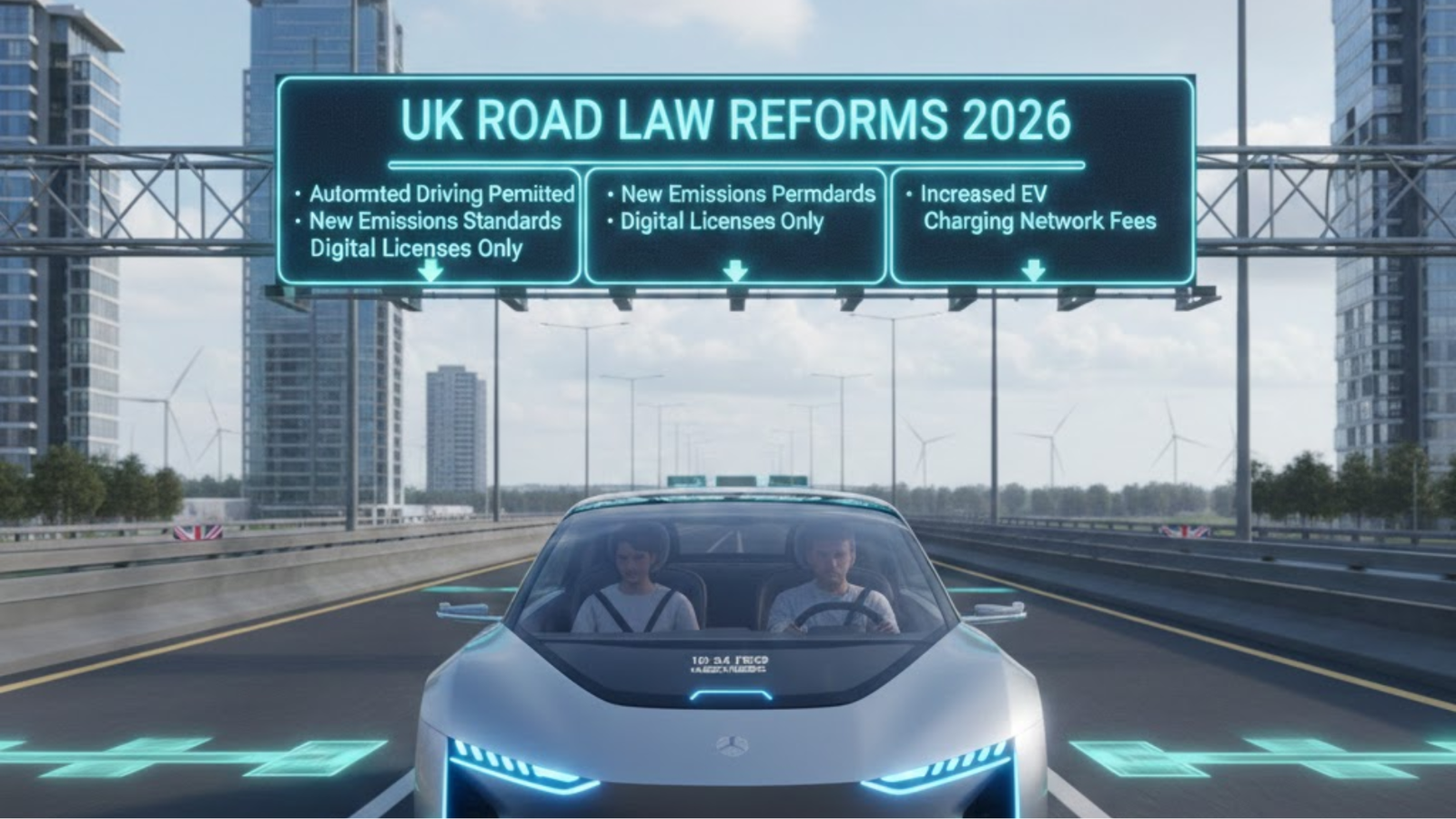
Driving in the United Kingdom is undergoing a seismic shift. As we navigate through 2026, a wave of new regulations is hitting the tarmac, fundamentally altering the costs and responsibilities of every motorist. From the end of long-standing tax exemptions to the introduction of advanced safety technology, the “rules of the road” are being rewritten to align with net-zero targets and ambitious safety strategies. For those behind the wheel, staying informed is no longer optional—it is a financial and legal necessity.
The End of the EV Tax Holiday
For years, electric vehicle (EV) owners enjoyed a “tax-free” honeymoon period as an incentive to switch from combustion engines. However, as of 2026, the honeymoon is officially over. EVs registered on or after April 1, 2017, are now subject to the standard annual Vehicle Excise Duty (VED). While the government has softened the blow by raising the “Expensive Car Supplement” threshold for EVs from £40,000 to £50,000, many drivers will still see their running costs climb. This change marks a transition where electric cars are treated as the “new normal” rather than a niche category requiring special subsidies.
Fuel Duty: The Phased Return to Reality
Petrol and diesel drivers are also facing a squeeze at the pumps. After years of freezes and a temporary 5p-per-litre cut, the government is implementing a phased increase in fuel duty. The current freeze is set to expire in late 2026, with planned increments of 1p in September, followed by further rises through early 2027. To counter “rocket and feather” pricing—where pump prices rise quickly but fall slowly—the new “Fuel Finder” scheme now mandates that petrol stations report live price changes within 30 minutes. This transparency aims to help drivers hunt for the cheapest fuel in real-time.
Key Financial Changes for UK Drivers (2026)
| Regulation Change | Affected Vehicle Type | Estimated Impact |
| Vehicle Excise Duty (VED) | Electric Vehicles (Post-2017) | Standard rate of ~£200/year |
| Expensive Car Supplement | EVs over £50,000 | Additional ~£425/year |
| Fuel Duty Increase | Petrol and Diesel | Phased 1p–5p rise |
| London Congestion Charge | EVs and Hybrids | Discount reduced; £18 standard fee |
| First-Year VED Rate | High-Emission (>255g/km) | Up to £5,690 for new cars |
London’s Congestion Charge Shake-up
The capital continues to lead the way in discouraging vehicle use in urban centers. From January 2026, the London Congestion Charge has increased to £18 per day. More importantly, the 100% “Cleaner Vehicle Discount” for EVs has been replaced. Under the new tiered system, electric cars now receive only a 25% discount, while electric vans and HGVs receive 50%. This shift reflects a growing priority to reduce overall traffic volume, regardless of tailpipe emissions, as London aims for a lower-traffic future.
Mandatory Speed Limiters and Safety Tech
If you are purchasing a new vehicle in 2026, it likely comes equipped with more “nanny” tech than ever before. Following the formal adoption of various safety regulations, Intelligent Speed Assistance (ISA) is now a standard requirement for all new cars sold in the UK. This system uses GPS and cameras to detect speed limits and can actively reduce engine power or provide haptic feedback if you exceed them. Other mandatory additions include advanced emergency braking for pedestrians and cyclists, and “black box” event data recorders to assist in accident investigations.
Stricter Limits on Road Safety
The government’s 2026 Road Safety Strategy has introduced a consultation on lowering the drink-drive limit in England and Wales. The proposal seeks to align the limit with Scotland’s stricter threshold, reducing it from 35 micrograms to 22 micrograms of alcohol per 100ml of breath. Furthermore, older drivers are facing a significant change; those aged 70 and over may soon be required to undergo mandatory eyesight tests every three years to renew their licenses, moving away from the previous “self-declaration” model.
Digital Driving Licences and Enforcement
The UK is rapidly moving toward a “digital-first” motoring ecosystem. While physical plastic cards remain valid for now, the rollout of digital driving licenses via the GOV.UK Wallet app is in full swing. This shift is accompanied by increased automation in enforcement. Police are now utilizing upgraded Automatic Number Plate Recognition (ANPR) systems that can instantly flag vehicles without a valid MOT, insurance, or tax. With the system becoming more integrated, the “buffer period” for administrative errors has effectively vanished.
FAQs
Q1. Do I need to retrofit a speed limiter to my older car?
No. Mandatory Intelligent Speed Assistance (ISA) rules apply only to new cars manufactured and sold from 2024 onwards. You are not legally required to install this technology on vehicles registered before these rules took effect.
Q2. Is my electric car still exempt from the London Congestion Charge?
No. The 100% discount for electric vehicles ended in late 2025. From January 2026, EV drivers must pay a discounted rate (typically 25% off the standard £18 fee) provided they are registered for Auto Pay.
Q3. Will the new drink-drive limits affect me immediately?
The government is currently in the consultation and implementation phase of the 2026 Road Safety Strategy. While the goal is to lower the limit to 22mg, you should check official GOV.UK updates for the exact date the law becomes enforceable in your specific region.
Disclaimer
The content is intended for informational purposes only. You can check the official sources; our aim is to provide accurate information to all users.