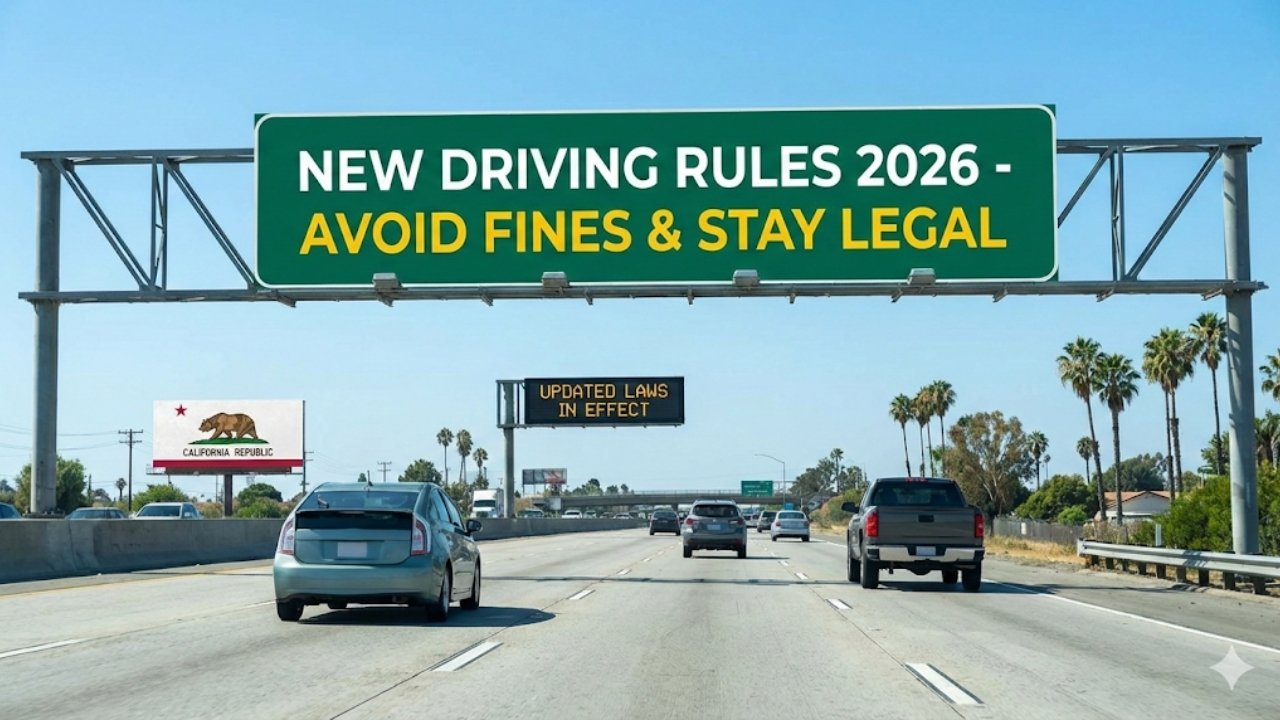
California’s roads are getting safer with fresh 2026 driving regulations aimed at cutting accidents and boosting accountability. These updates target everything from drunk driving to highway hazards, helping drivers like you dodge steep penalties while keeping everyone secure. Staying informed means fewer tickets and smoother travels ahead.
Expanded Slow Down, Move Over Law
One of the biggest shifts comes from AB 390, widening the “Slow Down, Move Over” rule. Drivers must now slow down or switch lanes not just for emergency vehicles, but for any stopped car flashing hazard lights, cones, or flares—including highway maintenance trucks. This change tackles roadside risks, as data shows these scenarios cause hundreds of injuries yearly. Forgetfulness here could land you a fine up to $1,000 plus points on your record, so scan ahead on freeways.
Tougher DUI Penalties and Devices
AB 366 ramps up the fight against impaired driving by extending mandatory ignition interlock devices (IIDs) for all DUI offenders through 2033, even first-timers. These breathalyzers prevent your car from starting if alcohol is detected, cutting repeat offenses significantly. Probation periods stretch longer too, with higher fines and license suspensions hitting harder—expect costs over $2,000 beyond court fees. Sobriety checkpoints will enforce this strictly starting January.
School Zones and Speed Enforcement
School zones see speed limits dropping optionally from 25 to 20 mph in many cities until 2031, then automatically where signed. Caltrans gains power to trim highway speeds by 5 mph in problem spots, issuing warning tickets for the first 30 days before full fines kick in. A new pilot uses radar in work zones to snap speeders and mail citations automatically. Kids’ safety drives these tweaks, slashing collision risks during peak hours.
License Plate and Tech Restrictions
AB 1085 cracks down on license plate covers, tints, or devices that obscure readers for cops or tolls, with $1,000 fines per offense. AB 486 makes carrying key-programming tools for burglary intent a misdemeanor, up to six months jail and $1,000 penalties. These rules close loopholes exploited by thieves and evaders, keeping automated systems reliable. Swap out any shady gear now to stay compliant.
Autonomous Vehicles Under Scrutiny
Driverless cars face new oversight: cops can issue violation notices directly to manufacturers, and from July 1, unmanned AVs need two-way comms for first responders. This ensures accountability as self-driving tech proliferates on California streets. Human drivers benefit too, with clearer interaction rules reducing confusion in mixed traffic. Test your AV knowledge to avoid surprises.
Here’s a quick reference table on key 2026 changes and penalties:
| Rule Category | Key Change | Fine/Penalty | Affected Drivers |
|---|---|---|---|
| Slow Down, Move Over | Applies to hazard lights/cones | Up to $1,000 + points | All highway users |
| DUI/IID Requirement | Mandatory for all offenders to 2033 | $2,000+ + longer probation | DUI convicts |
| School Zone Speeds | 20 mph option, then standard | Varies by locality | Near schools |
| License Plate Obscure | Bans covers/tints | $1,000 per violation | All vehicles |
| AV Oversight | Notices to makers, comms required | Manufacturer fines | AV operators |
| Work Zone Radar | Auto-citations for speeding | Standard speeding ticket | Highway work areas |
Highway Work Zone Innovations
Work zones get high-tech upgrades with automated enforcement mailing tickets to owners for speeders. Caltrans’ speed reductions come with grace periods, easing drivers into compliance. These steps respond to rising worker deaths, promising fewer disruptions and safer crews. Watch for signs and ease off the gas.
Consumer and Broader Protections
New laws also tweak car buyer rights and red-light camera expansions under SB 720 for automated enforcement. Overall, 2026 emphasizes prevention over punishment where possible. Brush up via the DMV site or apps to master these shifts effortlessly.
FAQs
Q: Do first-time DUI offenders need an IID?
A: Yes, all through 2033.
Q: What’s new for hazard light stops?
A: Slow or move over for any flashing warnings.
Q: Can cities lower school speeds?
A: Yes, to 20 mph until 2031.
Disclaimer
The content is intended for informational purposes only. You can check the official sources; our aim is to provide accurate information to all users.