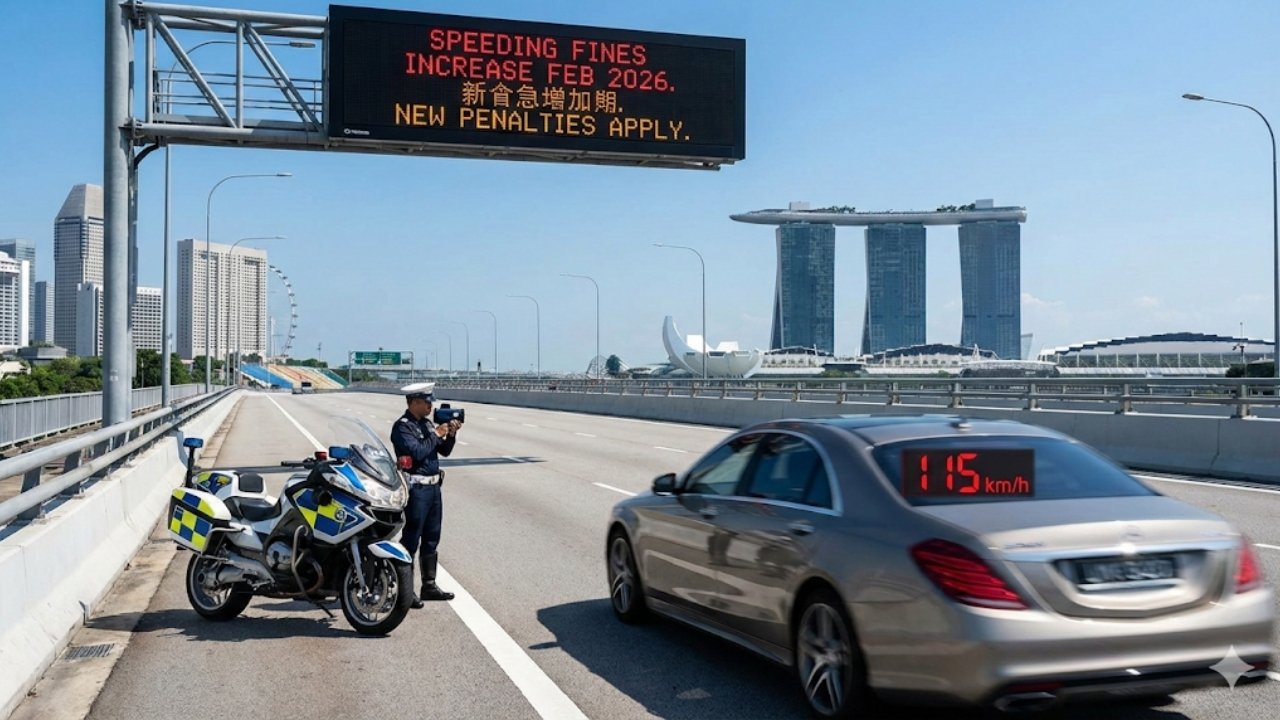
Singapore is stepping up its fight against reckless driving with tougher penalties for speeding, effective from January 1, 2026. These changes aim to cut down on road fatalities by making drivers think twice before pressing the accelerator too hard.
Background on the Policy Shift
The Ministry of Home Affairs announced these updates in May 2025, building on earlier warnings from Minister K. Shanmugam during a Traffic Police event in February. Speeding has surged, with 192,000 violations in 2024—a 64% jump from the prior year and the highest in a decade. Authorities link this to rising accidents, injuries, and deaths over five years, pushing for rules that match the real dangers of excess speed.
Why Speeding Demands Action
Fast driving shortens reaction times and turns minor mishaps into tragedies, especially on Singapore’s busy roads. Data shows speeding as a top factor in crashes, straining emergency services and families alike. By hiking fines and demerit points, the government seeks safer streets for everyone—from daily commuters to delivery riders. This isn’t just punishment; it’s a call for responsibility in a city where every kilometer counts.
Breakdown of New Penalties
Penalties now scale sharply with how much drivers exceed limits, hitting both light vehicles like cars and heavier ones like trucks. Demerit points jump by two to six per bracket, while fines rise $50 to $100 based on speed overrun and vehicle type. Serious cases over 41 km/h go straight to court, risking license suspension or worse. Here’s a clear view of the changes:
| Speed Excess (km/h) | Old Demerit Points | New Demerit Points | Old Fine (Light/Heavy Vehicle) | New Fine (Light/Heavy Vehicle) |
|---|---|---|---|---|
| Up to 20 | 4 | 6 | $150 / $200 | $200 / $250 |
| 21-30 | 6 | 8 | $200 / $250 | $300 / $400 |
| 31-40 | 8 | 12 | $300 / $400 | $400 / $500 |
| 41-50 | 12 | 18 | Court | Court |
| >50-60 | 18 | 24 | Court | Court |
Impact on Everyday Drivers
For the average Singaporean heading to work or school runs, these rules mean closer attention to signs and cruise control. Accumulating 24 points in three years already risks a ban, and now it happens faster. Fleet operators face bigger headaches too, with higher costs for violations by employees. Tech like red-light cameras that also catch speeders will enforce this without mercy.
Enforcement and Tech Upgrades
Traffic Police will ramp up patrols and use advanced cameras for round-the-clock monitoring. No more excuses about “not knowing”—public campaigns and apps will remind drivers well ahead. Repeat offenders could see fines doubling or jail time, aligning with broader Road Traffic Act tweaks for even stricter measures. Preparation starts now: check your habits before 2026 hits.
Broader Road Safety Gains
These fines could drop violation numbers and save lives, much like past crackdowns on drunk driving did. Safer roads boost the economy too, cutting healthcare bills and traffic delays. Experts predict a cultural shift where speeding feels as outdated as ignoring seatbelts once did. Drivers who adapt will enjoy smoother, stress-free journeys.
Steps for Compliance
Review your vehicle’s speed limiter if required, update your dash cam, and use apps for real-time limits. Join workshops or follow LTA alerts to stay ahead. Safe driving isn’t optional—it’s the smart choice in a tightening system.
FAQs
Q1: When do the new fines start?
January 1, 2026.
Q2: How much will fines increase?
By $50-$150, plus more demerit points.
Q3: What if I speed over 40 km/h?
Court prosecution, no composition fine.
Disclaimer
The content is intended for informational purposes only. You can check the official sources; our aim is to provide accurate information to all users.